
Space the final frontier
The only hope for mankind, as some would believe!
Its science fiction but they believe it’s true!
My comments in blue, Quotes & Scriptures in a variety of colours.
President Richard Nixon said of the Moon landing of 1969, “This is the greatest week in the history of creation” and;
Robert Heinlein; prolific American writer considered to be one of the most literary and sophisticated of science-fiction writers, said; “This is the greatest event in all the history of the human race … The human race will not die, even if we spoil this planet, it’s going to go on and on and on.” Many more since that time have voiced the same sentiments and with that arrogant mentality one can see why so many ignore the threats facing the environment and of the destructiveness of man’s wars, so they think they can destroy our beautiful planet earth and go to another one, and the amount of money and precious resources wasted on this folly it’s total stupidity. Don’t get me wrong, I do find it fascinating to know more about our solar system and the universe in general, but there is a need for balance when there are so many other more important concerns facing mankind, even endangering our very existence. It is disgraceful that they have no idea or ignore the facts of how special and unique our planet and solar system are.
Mixed up in all these big claims, is the hope that if they could just find one earth like planet with life on it, then that would in their minds prove the theory of evolution and remove the need for the existence of the Creator God. Which is something many have been desperately trying to prove since Darwin’s time without any success.
So are there really other earth like planets? Is it possible that we would be able to see them? Is it possible that we would be able to find life on them? Is it likely, is it possible that they could finally get evidence of alien life?
More recently we’ve heard on the news statements like;
In a distant solar system an amazing discovery the first planet to be found that’s like ours.
NASA says; plants from Earth could be transferred there and would probably survive!
1,400 light years away the first planet to be found that’s very much like ours that could conceivably host life.
And detailed images of other planets, even show stunning sea views;

These are bold statements and beautiful detailed pictures, but what do we actually know, what is fact and what is fiction or wishful thinking, hype. If there are earth like planets in other solar systems is it possible for us to see them? When even the closest planets are 1,400 light-years away. Just one light year being equivalent to approximately 6 million, million miles (6,000,000, 000,000), so that makes the suggested planet 8.4 Quadrillion (8,400,000,000,000,000) miles away!
The Earth in comparison to the Sun
For example could our Goldilocks planet earth be visible from another solar system? Visible enough so that it could be recognised as a planet, a planet that has an atmosphere, which atmosphere is breathable and all the criteria required for life, when we consider how small the earth is compared to our star the sun.

It doesn’t seem to be recognised or should I say acknowledged how extremely small the earth is compared to the sun and some of the other planets, especially the gas giants in other systems that are always being highlighted in the search for earth like planets it is certainly at times played down to the point of deceit.
Like this;

We will see later how large supposedly earth like planets are portrayed compared to their stars.
But sometimes the truth is stated;
Horizon: Secrets of the Solar System 3/3/15 .
Astronomer Chris Watson, a planet hunter.
If we were an alien civilisation looking back at our solar system, if we happen to catch sight of Jupiter transiting the face of the Sun, we would see a 1% dip in Sun light. For a planet a lot, lot smaller like the earth that dip is much, much smaller – it’s minuscule. And that’s why it’s so, so difficult to detect these… (31min)
One hundred and nine earths would fit across the diameter of the sun and it would take approximately 11,881 earths to cover the cross sectional area of the sun taken as if in 2 dimensional. The earth is but a spec and that’s without taking into account of the brightness and glare of the sun and its relative apparent brightness is reduced by 62 billion times, if viewed from another solar system. Even from just our closest neighbouring solar system 1,400 light-years away, from that huge distance even with the largest telescope it would be invisible. That being the case how is it possible that astronomers can see other earth like planets, which would have to be relatively the size of earth, around a similar type and size star in other solar systems? The definition will be a fraction of what we have of the sun from our location.
By comparison, the next closest star to the Earth is 250,000 times farther away, and its relative apparent brightness is reduced by the square of that ratio, or 62 billion times. Ency. Brit.
By comparison Jupiter has a diameter 11 times that of earth and a cross-sectional area 121 times that of earth. We are told a thousand earths would fit inside Jupiter, even though there have been four previous probes to Jupiter; Pioneer 10, Voyager 1, Voyager 2, Galileo and now the fifth probe Juno. Jupiter is still a huge mystery as little is known about what’s under the acid clouds and that’s what Juno is hoped to reveal the mysteries beneath the clouds.
One astronomer called Jupiter “the king of the solar system” and said “if you were looking from afar our solar system is mainly four big planets and some debris”, so in other words Jupiter, Saturn, Uranus and Neptune could possibly be seen, but mercury, Venus, Mars and our Goldilocks Earth would not be visible as planets they were likened to just insignificant “debris”, unrecognisable as planets. Our solar system that we have here was likened to the oddball of solar systems, the norm, the others are “weird” in comparison to our organised solar system.
Horizon: Secrets of the Solar System 3/3/2015
The giant planets’ story IS the story of our solar system. We like to think that the earth is really important, but the truth is if you were looking from afar our solar system is mainly four big planets and some debris. (6 min)
Jupiter … the king of the solar system. Dr Scott Bolton (10 min)
Of all the planetary systems so far discovered, it seems we are the only one with the lucky roll of the dice. Presenter Ruth Wilson
You might think that maybe the solar system that we have here is actually the oddball and the natural order of things are these other systems that we think of as weird. Dr Kevin Walsh (58 min)
And speaking of debris Jupiter is very important for us and all life on earth, due to Jupiter’s size, it’s larger than all the other planets put together and so its gravitational pull is huge and vital for it allows the earth to be habitable as its gravitational pull attracts comets and asteroids and other bodies that might otherwise smash into earth.
Carole Mundell. Professor of Extragalactic Astronomy, Uni. Bath
Jupiter is the planet that keeps us safe. It’s the one that has the gravitational pull … comets and asteroids and other bodies that might otherwise smash into earth, it cleans up the solar system and allows the earth to be habitable. Breakfast 4/9/16
So Jupiter is truly the king, it rules the solar system protecting us from foreign invaders and allows the earth to be habitable. So as it’s vital to have a Jupiter like plant as our earth’s protectorate, why have we not seen it as part of the criteria in the search for other planets called earth like? A Jupiter like plant is never mentioned when they claim they’ve found other earths!
The Pale Blue Dot
It reminds me of ‘The Pale Blue Dot’ a photograph of earth just one pixel, taken by NASA’s Voyager 1 spacecraft as it was leaving our solar system in 1990.

Taken from a distance of 3.7 billion miles (3,700,000,000), given the craft and on board camera were made a few decades ago, but realistically speaking could a powerful telescope from another solar system, 1,400 light-years away, which is 8.4 Quadrillion miles (8,400,000,000,000,000), really do any better? If they didn’t know exactly where the earth was; they could have thought that Voyager 1’s picture of earth was no more than “debris”. Given the literally astronomically 8.4 Quadrillion miles (8,400,000,000,000,000) they haven’t got a chance of detecting an earth-like planet in another solar system and know for a fact it is habitable.
Mercury’s transit of the sun
Another example of how small planets are in comparison to a star like the sun; is the Mercury transit of the sun as seen from earth.

Mercury is less than half the diameter of the earth and so would block about a quarter of the light of the sun as earth does.
However as Mercury is about a third of the way out from the sun than the earth is, from our perspective on earth; Mercury would appear to us possibly a third smaller than the earth would do from farther out in the solar system and then going farther out both would gradually become invisible, Mercury first then earth.
Mercury the enigmatic puzzling mystery planet
Even though Mercury is one of Earth’s closest neighbours it is a bit of a mystery, there are a lot of differing ideas about it and it still puzzles astronomers;
The Sky at night 8/5/16
Presenter Dr Maggie Aderin-Pocock starts off with;
Mercury the most puzzling planet in the solar system.
Mercury has long been seen as an enigmatic planet.
It remains the problem child of the solar system.
Co-presenter Chris Lintott
The core is one of the great mysteries of Mercury. (7 min)
All this despite the fact astronomers have observed Mercury with earth based telescopes and bounced radar pulses off the planet with the Arecibo radio telescope. (3 min)
And Mercury has even had; two missions visit the planet, the first was Mariner-10 in 1974 and again in 2011, when NASA’s MESSENGER probe visited it making high-definition images.
As Co-presenter Chris Lintott said; there is only so much we can tell by observing from earth. To learn more about Mercury, we need spacecraft data. (4min)
So despite being so close to earth to be able to bounce radar pulses off the planet and two probes having been sent to Mercury it is still a great mystery and puzzling to astronomers, and we can’t send probes to other solar systems for the needed spacecraft data, that still leaves astronomers puzzling, which doesn’t bode well for the other-earth hunters!
Then we have
NASA’S new Horizons probe to Pluto
Before the new Horizons probe visit to Pluto the declassified planet to a dwarf planet, we had pictures or images of Pluto and even landscapes;
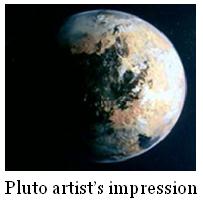
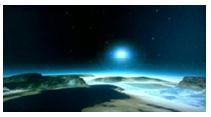
However most people wouldn’t be aware that the only real image of Pluto before NASA’s New Horizons probe reached Pluto was this blurry, grainy image; ;
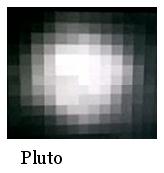
Given the above blurry, grainy image of Pluto was taken by the Hubble Space Telescope from a distance of 3 billion miles and Pluto is a small dwarf planet, but even if it were earth sized it would be just a larger grainy image with absolutely no definition to indicate what kind of planet it is like and these beautifully detailed images of these suggested earth like planets are 8.4 Quadrillion miles away!
The blurry, grainy image wasn’t made public knowledge or at least made practically clear until NASA’s New Horizons probe was approaching Pluto, then it was made very clear how little was actually known about Pluto to show the importance of the mission, despite the previous lack of information there were some very detailed images of the dwarf planet. They are called artists impression’s which as it turns out were based on nothing but imagination or in other words were fakes.
We now have we are told real pictures or images of Pluto and even landscapes, which are somewhat different;


Also as the probe was approaching Pluto late in 2015, we were informed how little we knew about the planet Pluto, years after Kepler and all the other telescopes were apparently detecting earth sized planets thousands, of millions, of millions of miles away, with greatly detailed images. Yet we knew very little about the planet Pluto in our own solar system, that’s really amazing. . Charon is one eighth of the mass of Pluto (ten times the relative mass of our moon) and consequently Charon isn’t even Pluto’s moon as Charon doesn’t orbit around Pluto, which makes them binary dwarf planets. The probe has brought up even more mysteries, and again we get statements like we are going to rewrite the book on astrophysics again.

Interestingly Pluto has a blueish haze as seen from NASA’s New Horizons, but Pluto’s surface is ice made up of nitrogen, methane and carbon monoxide, and Pluto’s atmosphere is a problem for them as there is no oxygen, yet it has a blueish haze which is another mystery!“
Pluto’s Hazes are a bit of a Beautiful Mystery” NASA
So a bluish colour does not indicate a habitable planet or a breathable atmosphere. Which again doesn’t bode well for the earth like planet hunters.
The moon an essential for life on earth
Its visible area is less than 1/13 of earth
So small but crucial
Do We Really Need the Moon? 3/1/2011
Presenter Dr Maggie Aderin-Pocock
Most know that the moon gives us tides due to its gravitational pull, but that is just one reasons why we need the moon. For those who believe in evolution the tides created by the moon are essential for the start of early life;
Early tides may have been the trigger that kick started life into action.
Pro John Sutherland believes the ebb and flow of the tides may have played a crucial role in the origin of life… He then shows how he thinks the building blocks for life developed, essential for the first part of the evolutionary theories development of life (a myth but for those who believe evolution essential, see evolution verse logic). We are making some of the building blocks of life. Yes! Just from simple tidal conditions and simple chemistry. And it’s all driven by the moon? Yes. Life on earth driven by the moon. (17min)
The earths tilt gives us the seasons, it’s the moon that gives the earth its 23 degree angle of axis and keeps it in place.
The earth only stays at this 23 degree tilt because of the moons stabilising effect. This has played a crucial role in shaping our climate. If the earth wasn’t tilted, if it were upright, then the sun’s light would shine evenly over the surface throughout the year. Always overhead at the equator, and barely reaching the north and south poles. The temperature would be constant throughout the year, there’d be no summer or winter. No variation at all. It’s this variety of light that’s so important. (40min)
Without the moon we would have no seasons that life on earth depends on. The life cycle of so many animals and plants is driven by the beat of the seasons.. But the earth only stays at this 23 degree tilt because of the moons stabilising effect.
Even if the Moon were just 10% farther away or moved its orbit 10% away earth would greatly suffer; We may suffer the same fate if our Moon moved just that 10% further away. And what will happen then? It’s possible we’ll go the same way as Mars. Pretty quickly the ice caps would melt. And a huge amount of fresh water would flood the world’s oceans. Sea levels would rise by more than 60 metres. Every coastal city in the world would be gone. And inland areas that survived would be transformed…
Quite a bleak outlook for earth and probably most if not all life already existing on earth would not survive a change, but then she continues for those who believe in the theory of evolution; the seasonal shifts will be too fast and too extreme for evolution to keep pace. So basically with the evolution theory; evolving organisms could not deal with the extremes in temperature, so if the moon wasn’t in the right orbit originally then life would not have developed.
However the Moons existence, size, mass, axis obit, speed of orbit and distance from earth are just a few of the vast amount Goldilocks criteria needed to be met for life to be on earth, that are not even considered by those who say they have found other Earths, without these criteria being met life on earth would not exist in the first place and if any of these changed life would become extinct. It is total foolishness to even think that another planet is earth-like without taking the moon into consideration and Dr Maggie Aderin-Pocock seems to agree that the moon is so vital that it should be part of the criteria;
All this speculation makes me realise how lucky we are that the moon is where it is right now. A tiny shift and life on earth could be so different. And what about life beyond earth? Are we alone? Or are there other planets with life forms similar to ours? … (48min) I reckon, given what we now know about the moon, how it’s influenced life here on earth, I think we should focus any searches on planets with moons like ours. There are many moons in the solar system, but they are not like ours. She goes on to say how our moon is unique in our solar system; It’s not too big and it’s not too small. Like Goldilocks and the porridge, it’s just right. Although she still hopes that another earth is attainable.
For billions of years it’s gazed down on us shaping and changing the course of life. In so many ways the Moon has been the making of us…
Do We Really Need the Moon? Of course we do.
So as it’s crystal clear that we need the moon for so many reasons to exist, and as Dr Maggie Aderin-Pocock stated; we should focus any searches on planets with moons like ours, so why then has not one so called earth like planet ever been mentioned with the existence of an orbiting Goldilocks moon!
The Sky at night 20/7/2015 Presenter Dr Maggie Aderin-Pocock
Our moon is 1.2% the mass of the earth… it’s the biggest ratio of all other major planets. It is certainly big enough for its gravity to have an impact down here. And the tide is just the most visible consequence.

The obvious answer is that as they can’t optically see planets the size of the earth 8.4 Quadrillion miles away, so how ON EARTH can they see a moon at that distance, when 3.67 moons would fit across the diameter of the earth, or to put it another way; the cross sectional visible area of the moon is smaller than 1/13 of the earth and a mass 1.2% of the earth, and to be able to establish all its criteria needed to be like our moon? The answer they can’t and never will, so the hunt for another earth is a non-starter, unattainable, a total flop.
The requirement of a Goldilocks moon with all of its vital benefits to the earth and a Jupiter like plant as an earth like planet’s protectorate (which should be visible) are just the tip of the iceberg when it comes to the needed criteria for a truly Goldilocks earth like planet and enabling the earth to be habitable.
Our solar system is unusually orderly
Horizon: Secrets of the Solar System 3/3/15
Astronomer Chris Watson, a planet hunter.
Speaking of the planets they have discovered by the transiting method, Astronomer Chris Watson shows a comparison on a large projection screen of the earth in our organised solar system as the odd one out to a mass of other really weird solar systems, that clearly shows how special our solar system is and states; What you can see is a huge diversity of all the different planetary systems… really weird solar systems … it is ridiculous, actually, what is going on? Extraordinary worlds. (32min) That’s a statement from a planet hunter.
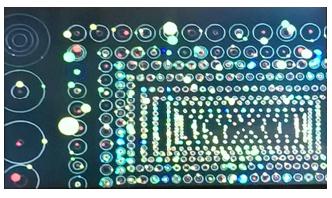
Our solar system is in top left corner showing only the four inner planets, clearly organised orderly and the others systems are clearly really weird solar systems.
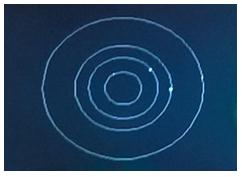
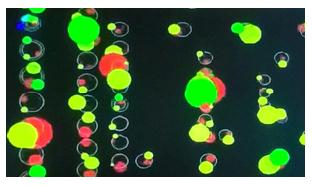
The Narrator Ruth Wilson stated that the others; they break every rule in the book and make us look like the odd one out. So we have large gas giant planets… and then you can see the really short period, really weird solar systems. They really don’t look anything like our own solar system. Some of these planets actually have orbits of just a few hours. There’s even systems spiralling around multiple planets. Astronomer Chris Watson Who knows what we might discover in this smorgasbord of planets?
The inescapable truth seems to be that planets move. And if it can happen in exoplanetary systems, it can happen in ours… once we accept the idea that planets can move, we can begin to explain some of the unsolved mysteries of the solar system. In particular, why Mars is so small and the curious composition of the asteroid belt. (42min) And it is thought that Jupiter was pulled in towards the Sun and removed a mass of material that would have contributed to Mars being a similar size and mass to earth, however its thought that Jupiter would have kept going towards the sun, becoming a hot Jupiter and even affecting the development of earth, if not for Saturn being pulled in and then pulling Jupiter back out to its present position by gravitational forces and in doing so caused the ice and rock asteroid belt. Seems strange, but if this theory is correct then the earth and all life on earth have another protectorate in Saturn, the planet that keeps the king Jupiter in its place. What are the odds of that happening by chance and again in another solar system, because the only example we have of a planet with life is earth and Jupiter is vital for us? It seems like things have been arranged, just so for life to exist and when things started to go astray they were corrected!


Then in summing up we have statements that our solar system compared to the other solar systems is a the oddball, a fluke, the only one with the lucky roll of the dice, that It’s amazing we survived at all and so our solar system is unique.
What we see in our own solar system is the result of a lot of unlikely or random events, and so our solar system is unique. Dr Hal Levison (56min)
Ending up with a stable system of planets was just a fluke, a lucky roll of the dice. It’s amazing we survived at all. The fate of the entire solar system, including the earth, was defined above all by our gas giant Jupiter. Of all the planetary systems so far discovered, it seems we are the only one with the lucky roll of the dice. Narrator Ruth Wilson
You might think that maybe the solar system that we have here is actually the oddball and the natural order of things are these other systems that we think of as weird. Dr Kevin Walsh (58 min)
That reminds me of Brian Cox (covered in evolution verses logic)
Professor Brian Cox, Wonders of the Solar System BBC 2, 2010
At the start of part 3; amongst all these wonders sits our earth an oasis of calm amid the violence of the solar system… unique atmosphere … perfectly balanced…the slightest changes… can lead to violent worlds. And although he speaks through the series of evolution with its if’s, perhaps and possibilities, in part 4, on the subject of our violent universe he states; our home is a very special ball of rock, although it’s governed by the same universal set of rules; our planet is not too big, not too small, not too hot, not too cold. Earth has been called the goldilocks planet, because everything is just right, our world is unique. He finishes with our view of the earth’s place in space has been turned on its head….and so I suppose it’s in many ways a miracle that it exists at all. So he’s hit by the awe and uniqueness of our earth and he feels he’s required to state that he thinks its existence is in many ways a miracle.
So compared to other solar systems our solar system looks so orderly, it is a the oddball, a fluke, Of all the planetary systems so far discovered, it seems we are the only one with the lucky roll of the dice, that It’s amazing we survived at all, our solar system is unique and the existence our earth is in many ways a miracle. It is so unique, so miraculous it’s like it was designed and created that way, it just seems so perfect.
And with comments like the oddball, the only one, unique and a miracle about our solar system and our earth from the above professionals’ one would conclude that our solar system is the only one to have an earth like planet, because it’s unique and a miracle. So logically according to the above professionals there are no other planets like earth. From a biblical point of view Almighty God may have created other earth like planetary systems, but He hasn’t told us, yet and if they do exist the chances of man finding any on his own are non-existent.
So let’s see some of these claims;
Of earth like planets
The first Second Earth
The search for the first “Second Earth” was over.
Planets that remind us of the earth
These were the claims in 2008, with Gliese 581c 20 light years away and this one had quite a lot of press and headline News coverage.
Horizon Are we alone in the universe? 29/2/2008
In the opening words; Planets that remind us of the earth! The discovery of Gliese 581c is a marvellous discovery. It shows how close we’re getting to planets that reminds us of earth. (2min) Showing this massively huge blob in front of a star, which is hardly how a second earth would be seen if it were possible to be seen from thousands of light-years away;
Then the head line images are shown;


Astrophysicist Prof Stephane Udry
Speaking of the ESO’s La Silla 3.6m telescope; With this instrument we can detect low mass planet five, ten times the mass of earth. (24min)
So it seems strange that he stated that the European Southern Observatory, in the Atacama Desert, which has a very large telescope that can detect planets as small as ten times the mass of earth, which is huge compared to earth so logically it can’t detect earth sized planets then, strange as that is what Gliese 581c and d were apparently supposed to be! Par for the course, I suppose, strange though!
Orbiting a red dwarf star a third of the mass of our sun. After years of hunting, the search for the first “Second Earth” was over. This latest find has set the world of astronomy alight. (27min)
Gliese 581c. The smallest and most earth like exoplanet yet detected
At last, scientists have found another planet that may just be capable of supporting life. (29min)
It’s strange that they can make the claim the search for the first “Second Earth” was over when they can only say it may just be capable of supporting life. If it’s not know if there is life on the supposed planet, as life is essential for a planet to be earth like! As its millions, billions of years of life that clears the atmosphere and makes our air clear and breathable for other life and it’s the remains of life over time that makes basic things like soil for other life to be able to live and grow, for yet other life. I know they can’t know if there is life, but I just had to point out the obvious flaw in these foolish statements. They have a blip on a graph which could be a plant, which could be rocky, which could have water, which could have an atmosphere and so on and on….
However then they changed their minds about Gliese 581c because aparently; The planet is so close to the star that immense gravitational forces have united the two. They’re tidally locked with the planet presenting just one face to the light. (32mins)
There were several sugestions then they said; Rather than resembling Earth, 581c could be a super Venus. (38min)
It’s probably too hot to be habitable. If it has water at all which is doubtful, that water would be boiled off, evaporated and gone.

Then they said there’s another planet;
Then they discovered a second super earth in the same system; Gliese 581d. This world lies on the far cold edge of the habitable zone. On first calculations this would make it a giant frozen world. But if it too enjoys a greenhouse effect, then it could be just warm enough for liquid water.

There are always lots of ‘probable’s’, ‘if this’ and ‘could be’, not very scientific though. So one is probably too hot to be habitable and the other a giant frozen world great, so not a; Second Earth at all and they are not; Planets that remind us of the earth.
And the following image is how they imagine Gliese 581d would look like; a giant frozen world, and so not another earth.

So neither suspected object that is thought to be a planet is “The first Second Earth” and of course all these images in reality are just figments of their imagination in over drive and it’s all a bit of a mess.
Kepler
Later on the presenter stated that the new Kepler … from day one, it will be sensitive enough to detect the wink of an earth-sized planet crossing its sun, tens of light years away. (45min) Years later the same thing is said of Tess.
Then a footage was shown of a planet which the first two pictures below are taken from, they show images of a planet so large it doesn’t just dim the light it totally blocks out all the light from the star, as the planet is so huge it dwarfs the star! That’s just ridiculous, the only way one could get this image is if you were relatively close to the proposed planet and not thousands of light-years away and the subject is about a detecting a tiny wink of a planet seen from earths Kepler satellite thousands of light-years away.
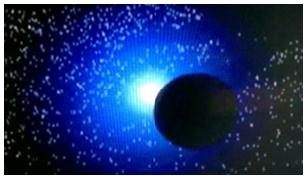
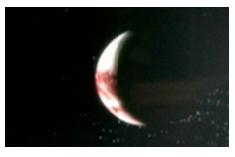
The truth of the matter is a planet like earth (the last picture) would be optically invisible as a planet and the only possibility of detection from such a distance would be of an unspecified blip on a graph, if at all, there would be nothing to get any details from, and if it were a planet the size of Jupiter that dip or dimming of light would be less than 1%, however the earth has a cross-sectional area 121 times small than that of Jupiter, so the detectable dip in light would be 121 times smaller again, as shown in the last picture of the ratio of the sun and earth. The pics above are clearly artist impressions, but portrayed in such a manner to give credibility to these outrageous claims of having the ability to find another earth, even portraying what it is supposed to look like, which is impossible, disgraceful.
Despite the fact that there were no actual real evidences of anything like another earth or signs of alien life, the presenter then makes the most outrageous statement with no basis what so ever; Between them, the planet hunters are beginning to define the first galactic map of earth like worlds. At last, a phone directory for those listening for a message from ET, (46min)
Dream on; the reality couldn’t be farther from what is shown and said here, and if there are earth like planets out there no planet hunters will probably ever know, as the fact is they are just too small, and will most likely never be visible enough to get anything like the amount of detailed information required, which point will be expanded latter.
And still no mention of a Goldilocks moon or a Jupiter like plant as an earth like planet’s protectorate and so on which are all so vital for life.
Then there were some more false hopefuls;
19/5/2013
Aliens: Are we alone
This is the most earth like planet we have ever found.
Planets like the earth are common!
working and up dating
24/7/15
BBC Breakfast
Kepler-452b
The first planet to be found that’s very like ours
That’s what we found
Plants from earth could be transferred there and would probably survive
working and up dating
.
.
.
At last some common sense and honesty
Will we find another earth?
We are all desperate to find an earth like planet
Do you think we will find another earth?
Hopefully … another earth will be out there one day
Even if we find another rocky planet, just like ours
Even signs of life
BBC. The Sky at Night, Second Earth 12/11/15
Presenter Dr Maggie Aderin-Pocock
We are all desperate to find an earth like planet. (1 min)
We’ll be examining some of the latest discoveries made here at the Cambridge Exoplanet Research Centre. And finding out how the hunt for a second earth a habitable planet like our own is coming along.
Presenter Dr Maggie Aderin-Pocock speaking to the man who discovered one of the first planets 20 years ago by the star wobble method; 51 pegasi b which is a hot jupiter;
Prof Didier Queloz, University of Cambridge; We can do earth right now… (using) a slight change of the light. A dimming of the light of the star, like a cloud hiding us the sun. We can use that to get the size of the planet as well as the period (rotation about its axis) of the planet. We can also combine the two, you can get the mass from the radial velocity and you can get the size from the transit. And we are doing that today to get the density of the planet. And the density helps you to understand the structure of the planet… Do you think we will find another earth? Oh Yes, I mean, we have found already earth-size planet, or earth-mass planet, most of them they; aren’t exactly earth equivalent because very often they’re too close to the stars, much too hot. So we don’t really know what we’re finding these days. But we have planet in all, in all size, in all masses, and in many different kind of structure from the one we have in the solar system. So we’re finding more and more and hopefully, that um, another earth will be out there one day. Oh, yeah, … maybe there are solar system equivalent just waiting for us to be found. (6min)
Co-presenter Chris Lintott; As we hunt for another earth we have to think about what it is that we are really looking for. What is it that makes a planet earthlike? Is it rocky? Is there liquid water on it’s surface? What gravity would it have? And would we be able to breath if we were standing on the planet? (8 min) The problem is they can’t detect any of these things on such a small scale as an earth like planet, they are just too small, it’s difficult enough to know if a blip is actually a planet, that is not factual, it’s just infered which is no more than a belief.
Detecting planets by the dimming of a star;
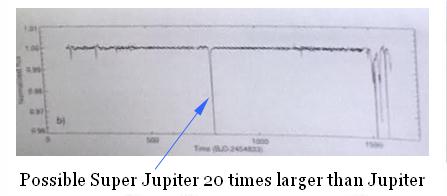
The graph above was highlighted by Co-presenter Chris Lintott.
This was in connection with a possible discovery of a Super Jupiter, it shows a stars brightness over time and an irregular dimming of 20% of the star (the stars type and size not specified), the time between dimming’s and length of dimming can give an indication of the size of the object(s) that is blocking the light from the star and the distance of the object(s) from the star. It cannot however show exactly what that object or objects are, just that the stars light has been restricted by something, one could infer a few other things though. (Covered latter)
However I know Chris Lintott was not suggesting that this was anything to do with earth like planets, but this method is how claims of earth like planets are made. So if we compare the dimming of the above (assuming the star is similar to the sun) to that of our Jupiter which would dim a sun like star by only 1% (and the above is 20% or put another way 20 times larger), which is interesting as the programme is supposed to be explaining how earth like planets are found. Anyway Jupiter is 20 times less than the above and an earth type planet would dim a sun like star 121 times less yet again than that, so an earth like planet would be dimming the star by 2,420 times less than the above graph! The people claiming to have found earth like planets don’t seem to be forthcoming with the facts of how minutely small the data is of these so-called earth like planet finds and that it’s just a tiny blip on a graph, I wonder why. Well not really, because it’s so minuscule to non-existent and that just may be why they don’t want to, as people would think it’s ridiculous, I do.
Continuing; BBC. The Sky at Night, Second Earth 12/11/15

Presenter Dr Maggie Aderin-Pocock; Kepler-452b 1,400 lightyears away. It’s probably the most earth like planet we’ve found so far. It’s a rocky world that’s in the habitable zone of its parent’s star where there could be liquid water. But there’s still a lot we don’t know about the planet, for example what its atmosphere made of.
Its Tess planet finder launches in just two years’ time. Its mission is to detect small planets orbiting bright host stars. Bright stars will reveal more detailed information about their planets, enabling us to better identify those that are truly earth-like. (17 min)
Which is what NASA stated; Tess will identify planets ranging from earth-sized to gas giants… in the solar neighbourhood…so that detailed characterizations of the planets and their atmospheres can be performed. NASA
Yet they said something similar about Kepler “Kepler’s objective is first to find out if planets like earth” a the BBC News stated Kepler; Launched march 2009 to try to find earth-sized worlds orbiting their host stars in the habitable zone.
Back to; BBC. The Sky at Night
With the above comments of; enabling us to better identify those that are truly earth-like planets is shown a planet orbiting a star;

Which is truly not an earth like planet! This is an image of a planet so larger it’s a Super Jupiter or larger, which is very deceptive and compare it to our earth and the sun in the second picture that’s if you can see it, its total hype. Tess maybe more powerful than Kepler and it may detect much larger planets like Super Jupiter’s but not earth-like planets that are not optically visible, possibly a tiny blip on a graph but not enough to get any details to gain factual information to be able to truly an object is a habitable earth like planet, this is a disgrace.
What about the atmospheric composition
Presenter Dr Maggie Aderin-Pocock; Even if we find another rocky planet, just like ours, orbiting a star similar to ours, even orbiting at the right distance, there’s another piece of information we need before we can confirm we’ve found another earth. And that information is the atmospheric composition of that exoplanet. And rather astonishingly we’re doing just that. Chris has been doing just that talking to Nikku Madhusudhan, who is leading the research into exoplanet atmospheres here at Cambridge. (23 min)
Co-presenter Chris Lintott; So we’ve discovered all of these planets, we know, I dunno, what size they are, what mass they are, but it’s not really enough. Do we have any prospect of trying to understand that? To, to investigateing these planets properly?
Dr Nikku Madhusudhan; So the way you do that is, you know transiting planets, for example, what the transit method is when the planet’s star system is aligned in such a way that you can infer the planet going in front of the star. Yeah, we see these dips in the starlight. As it turns out, the dip in the starlight is just a little more if you have an atmosphere on top of the planet. Because the atmsophere blocks the light from the star as well. Yeah, ye ah, but the key is that the atmosphere blocks the light in some wavelengths and not others. He later states this is with super hot Jupiters. And so that means if you have a transiting planet you can say something about what its atmosphere is made of. Exactly you can infer its chemical composition. Yep, so the exoplanets, um, that we are most able to study today are the big and hot ones. It’s because the bigger the planet, the bigger the starlight you’re blocking. Yeah the bigger the dip, so it’s just easier to find them. And hot because the hotter the atmosphere is the more puffier it is. Hm. Right, so, so the bigger it is… so most of the results to date have come from these objects called hot Jupiters… these are planets at a few thousand degrees…
So definitely not earthlike planets then!
Time and again plenty of talk about earthlike planets, but no proof, lots about super Jupiters, especially big hot ones, but not incy winsy little earth like ones to see, they are just too small to see or detect with all the criteria needed.
Presenter Dr Maggie Aderin-Pocock; To me it seems amazing we’ve come so far in just 20 years. Going from no planets to about 2,000 now! (27 min)
Co-presenter Chris Lintott ; And turning them from just points on a graph, from just data, to real places with atmospheres, and rain, and even clouds to annoy astonomers!
Yes the super big Jupiters thousand of degrees hot. The program made several attemps to suggest that there are ways to detect earth like planets, but nothing of any worth came out of it, they are still hoping, finishing with;
Presenter Dr Maggie Aderin-Pocock; What I’m fascinated by is if we did find an earth-like planet, I mean, even signs of life what would we do then?
Co-presenter Chris Lintott; We’d have to go, wouldn’t we? If you looked at the sky and yoou could say that star has an earth-like planet, the right temperature with life in its atmosphere you’d have to send a probe. It’d take thousands of years to get there! We still should send something, I mean, may be not us….
This program started with; we are all desperate to find an earth like planet, Do you think we will find another earth? midway we had hopefully … another earth will be out there one day, then Even if we find another rocky planet, just like ours and finished with; if we did find an earth-like planet and I mean, even signs of life. Well life is an essential for a planet to be habitable, earth took millions or billions of years before man could exist on it, the creation is a wonderfully complicated thing!
I do like Maggie Aderin-Pocock, even though she really wants earth like planets to be found, it’s refreshing to see a scientist speak so frankly that we haven’t found earth like planets.
So to conclude;
Despite all the claims and hype in the news and the mass of programs on the subject, without question man has NOT found any earth like goldilocks habitable plants in other solar systems and he is not likely to either, because yet again it’s all about the super big hot Jupiter’s and not about the “minuscule” “debris” earth sized plants.
The general idea is that they believe life evolved on earth and so it could have on many other planets and they are desperately hoping it has, however see; Creation – Evolution versus logic and you will see that’s not true, it’s just a fairy tale. So unless Almighty God has developed other planets as He did with our earth, other earth like planets are not possible.
Indeed what the search for earth like planets has really proven is that the odds of our planet without divine intervention being a Goldilocks planet in the first place and then remaining for billions of years is literally impossible, it’s just too miraculous and is a further evidence of the existence of Almighty God’s design and workmanship. It’s in part their attempt to ignore the existence of God, if they can just find one other planet like ours with life then it would be in their opinion finally one in the face of the existence of God, finally justification. Whether one believes in God or not that attitude is total foolishness.
See;
Creation Evolution versus logic
Creation – The Genesis account
End of section
—————-

 BiblicalNut